
Learn the skills and enjoy the ride
Ten strategies to make you a better, safer rider
Words by Matt King
Riding a motorcycle with a high degree of skill means more than being able to twist the throttle and go fast. According to the Motorcycle Safety Foundation (MSF), it actually calls on four different types of skills: physical, mental, emotional and social. You need to be comfortable with the controls, but just as important is how well you read road conditions, deal with traffic, adapt to weather and terrain, and interact with other road users sharing your space. Each of the four skills is important, but when it comes to managing risk, how you use your head matters most.
Mental preparation is the foundation of good riding decisions, aided by adopting proven riding strategies that help stack the deck in your favour when youâre navigating busy roads, unpredictable conditions, distracted drivers and everything else that can put motorcyclists at a disadvantage. Smart riders donât rely on luck. Below, weâll walk through 10 street-smart strategies designed to help you become a more confident, capable and safe rider, and help shift the odds in your favour.
If youâve completed the Harley-Davidson Riding Academy Basic Rider Course, or any other training programme based on the MSF curriculum, many of these ideas will probably sound familiar. Consider this a refresher, and a reminder of why these fundamentals matter every time you ride, no matter how much experience you have.
1. Search, evaluate and execute
The most basic rider strategy taught by the MSF, SEE stands for search, evaluate and execute and relates to the importance of using your eyes and mind (mental skills) as well as hands and feet (physical skills) to process information about your surroundings and execute precise, well-timed actions. SEE consists of three elements:
- First, search aggressively for potential hazards such as road or traffic conditions that could put you at risk.
- Then evaluate the situation by processing the information you see, anticipate potential problems and formulate a plan in response.
- Finally, execute your plan decisively by communicating with other road users or adjusting speed, lane position, or direction, and using escape paths to avoid conflict.
2. Scan, identify, predict, decide and execute
An expanded version of SEE is called SIPDE (scan, identify, predict, decide, execute) and it adds two additional elements to hazard management. The rider scans for hazards, identifies specific risks, predicts what might happen next, decides on a response and executes the manoeuvre. This strategy is useful for riders who can benefit from a more detailed mental checklist.
3. Lane positioning
Strategic lane positioning improves visibility to other drivers and helps create escape routes. To use this strategy effectively, divide the lane you are travelling in into three sections: left, centre or middle, and right, and use all of them to your advantage by choosing the position that maximises sight lines, avoids other vehiclesâ blind spots and leaves you room to manoeuvre if traffic conditions change suddenly.
4. The 2-4-12 rule
Maintaining adequate following time, distance and lateral space margins gives you time to react to road conditions or the actions of other drivers. This is especially important in higher-risk environments such as intersections, heavy traffic, poor weather or reduced visibility. Lead times can be broken down into the 2-4-12 rule:
- Two seconds is the minimum safe following distance under ideal road conditions.
- Four seconds gives you enough time to react urgently to avoid an obstacle or if you need to stop quickly to avoid running into a stopped vehicle.
- Twelve seconds is the amount of time you should plan forward as you anticipate and evaluate whatâs happening in your path of travel.
5. Escape routes
Alert riders always look and think ahead to spot and plan escape paths away from potential danger. This means identifying open lanes, road shoulders, gaps between vehicles and safe braking zones you can use in the event a hazard develops quickly and you need to get out of harmâs way.

6. Intersections
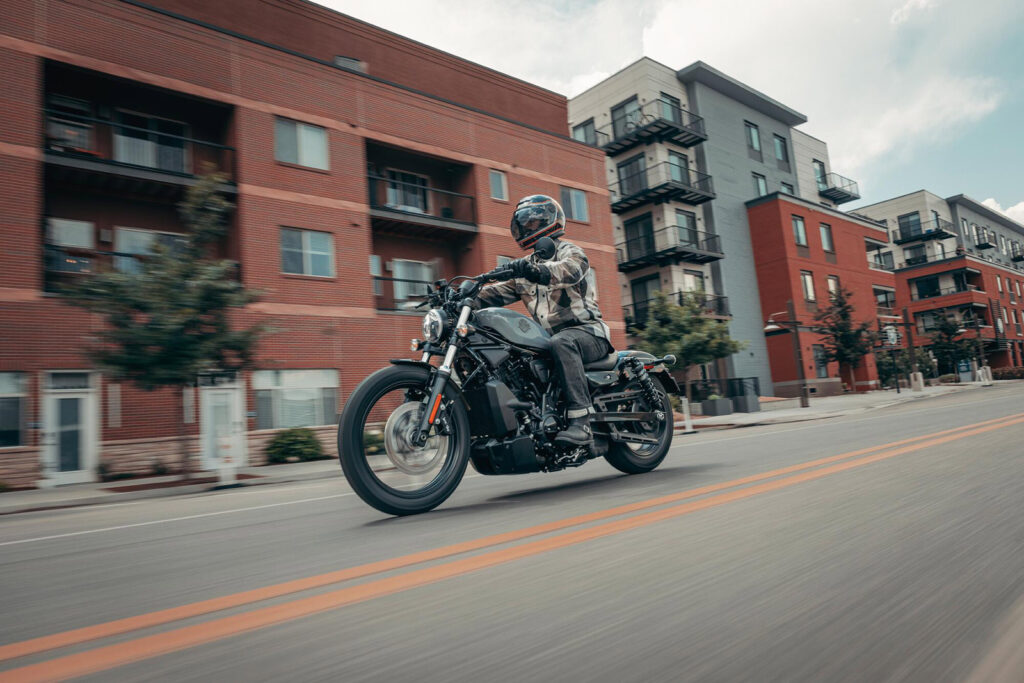
Intersections are high-risk areas for vehicular conflicts, especially motorcycles. Practice developing 360-degree awareness of what is happening ahead, behind and to your left and right when approaching an intersection, and be prepared to accelerate, stop, swerve to avoid dangers, anticipate turn violations or cross-traffic errors and plan your escape paths. Adjust your lane position to present yourself in a position where other vehicles are best able to see you.
7. âRide your own rideâ
This strategy emphasises riding within your personal limits and comfort level rather than matching othersâ speed or skill level. Itâs especially important in group riding, helping prevent peer pressure from increasing risk. Donât get goaded into bad riding behaviour or ride over your head just because others are willing to take more risks.
8. Riding curves
Approaching curves with proper speed selection, appropriate lane position and smooth throttle control helps maintain traction and visibility through the turn, reducing the chance of running wide or encountering surprises mid-corner. MSF teaches that the three lane positions (outside, middle, inside) correspond to 27 possible travel paths that can be used navigate a curve from its entry point through the apex to the exit. The middle-middle-middle and outside-inside-outside paths are the most commonly used. Select the path of travel that gives you the best visibility and maximises your ability to carry the selected speed through the curve safely.
9. Self-assessment
The act of self-assessment is one of the most important skills a motorcyclist can develop. Frequently assessing your physical and emotional condition before riding is critical, because factors like fatigue, stress, emotions, alcohol and other distractions can all increase your risk. If the conditions arenât right, the safest strategy may be to delay or modify your ride. Self-assessment is an ongoing process, not only before, during, or after each ride, but throughout your riding career.
10. ATGATT (all the gear, all the time)
Every rider knows the term ATTGATT or its corollary, âdress for the slide, not the ride.â When you dress for comfort, safety and visibility, youâll be prepared as best you can for anything the road or weather might throw at you. Always remember, there are no bad rides, just bad gear!
Putting it all together
Together, these strategies reinforce MSFâs core message: motorcycle safety depends on awareness, judgement, space management and disciplined decision-making, not just physical skill or experience. When everything comes together, the rider experiences a sense of bliss that is exceeded by few other activities.
Matt King is the former editor of HOG® and The Enthusiast® magazines, and a Motorcycle Safety Foundation-certified Harley-Davidson⢠Riding Academy Rider Coach.
Tags:
Read more tales from the Harley Owners Group!

Get ready for our 2026 events
Have you started planning your trips for 2026? There are lots of rallies to look forward to, happening all around Europe! Here’s the lowdown…

Win an Insta360 X5 and motorcycle bundle
If you like to video your rides, then there is no better way to do it⦠Insta360 are giving away three cameras

The 2025 Chapter Challenge results are in
Check out the winners of the 2025 Chapter Challenge and hear why your chapter should take part