Safe passage
Follow our tips for passing other vehicles safely and effectively
Story by John Sandberg
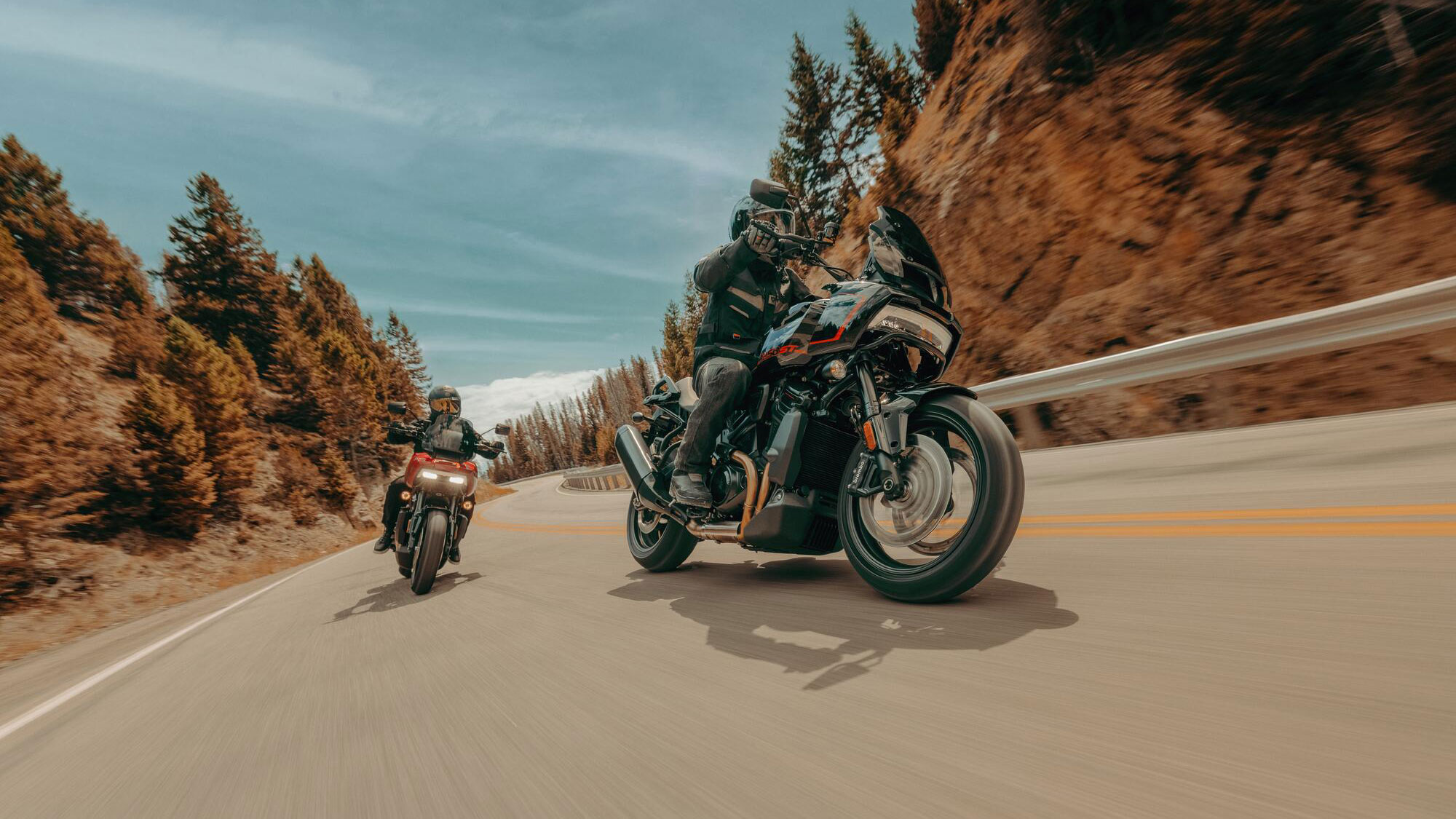
Passing. It’s a circumstance so common to riding and driving that it might seem mundane. It’s not. In fact, passing another motorist exposes you to some of the most dangerous riding situations, which is why we should utilise key strategies for safe passing. Ray Petry, operations and training lead at the Harley-Davidson Riding Academy, shares his techniques for passing safely.
No unnecessary risks
First, ask yourself why you want to pass. Are you on your motorcycle because you’re trying to get somewhere, or because you enjoy the ride? If it’s the latter, maybe it’s best to find a pace that flows with other motorists, rather than racing past them.
“In most circumstances, if you decide not to pass someone, you’ve reduced your exposure to potential danger,” says Ray.
Key steps to passing
It’s unlikely that you won’t ever need to pass another vehicle, so consider how to do so effectively. For Ray, that means employing this basic blueprint for every pass you make: constantly scan the road ahead and behind, in both the passing lane and the cruising lane; signal your intention to pass; initiate the pass while accelerating; swing wide around the vehicle you’re passing; once you have sufficient room in front of the vehicle you’re passing, signal your merge back to the original lane; merge and decelerate to the desired speed.
“That’s the basic outline for safe passing and should be used for every pass,” says Ray. “Yet there’s a lot of nuance in the details and varying circumstances of some situations.”
Gas-it or roll-on?
When passing another motorist, you’re faced with a decision to either roll on the throttle to build some speed, or to downshift, hit the gas and use a more sudden burst of acceleration to pass. Which is the best? In Ray’s opinion, the downshift-and-gas-it method is best because it typically carries less momentum into the situation, making it easier to abort the pass if the situation changes.
“Building speed before initiating the pass consumes time,” he says. “Plus it usually means you’re going pretty fast by the time you’re actually swinging wide to make the pass. If conditions suddenly change – such as an oncoming vehicle or a change in speed of the vehicle you’re attempting to pass – you can be forced to take evasive manoeuvres at the very moment you’re committed with maximum speed.”
The solution: pass decisively and quickly, utilising your motorcycle’s ability to accelerate.
Passing with a passenger
The strategy changes when your motorcycle is loaded with a passenger or the weight of extra gear.
“If my bike is fully loaded, I ride with the premise that I’m not going to pass unless it’s absolutely necessary, because a loaded motorcycle takes more time to accelerate and decelerate,” says Ray. If he does need to pass, Ray favours building speed before initiating the pass because a fully loaded motorcycle doesn’t accelerate quickly enough.
“My rationale is the same as for passing unloaded: use the method that consumes the least amount of time for the whole passing process. With a loaded bike, I’ve found that the building-speed method is generally the quickest.”
Passing in farm country
Years of riding in rural areas have made Ray acutely aware of the pitfalls associated with passing slow-moving farm machinery. “Someone driving a tractor or combine poses added challenges and danger to a motorcyclist,” he says. “Their equipment is usually pretty wide and sometimes hangs into a second lane. They can’t always see motorists behind them; they might not have working lights or turn signals; their equipment is cumbersome and can sling mud and dirt on to the road; and they might abruptly turn into fields without a clearly marked or visible driveway.”
Pay attention to clues to directional changes a farmer might make, such as the telltale sign of dirt chunks going into and out of fields, as well as other equipment being operated in upcoming fields.
Group dynamics
If you’re among a group of riders who are about to pass a motorist, agree in advance on how the group will or will not pass and follow that guidance while still making your own safety decisions.
“It’s a mistake to blindly follow the rider in front of you,” says Ray. “For starters, that rider might have different ideas of what’s safe, and second, even if the situation was safe for their pass, it might have changed by the time you’re ready to do so.”
The best approach is to employ the same strategies as when riding solo. Ray adds one extra bit of caution for group passing: “If you’re riding within a group and decide to pass a motorist, be extra cautious to look behind you before swinging wide. Others behind you could decide to pass before it’s their turn.”
How to get passed
How to handle occasions when you’re the one being passed? According to Ray, it’s best to check your ego at the door, do your own scan of the situation and allow the pass to occur as safely as possible.
“If I think the situation is safe and okay for passing, then I stay my course and don’t make any changes,” he says. “But I’m prepared to change that tactic and have a plan for it. If I see a motorist roll out to pass me, then I look at all the factors on the road. I want them to have a choice to go in front of me as well as the ability to change their decision and come in behind me. That might mean slowing down and moving to allow more space in your lane.”
More tips from Ray
- Before passing another vehicle, always check behind you to check another motorist isn’t doing the same thing at that same moment.
- Be wary of anything that could result in sudden directional changes by other motorists. Cues like a foreign registration plate might indicate a driver who isn’t familiar with the area and could make a sudden change. Likewise, if you’re near a tourist attraction or other popular landmark be prepared for last-second manoeuvres by other drivers. And consider someone driving really slow as a possibility for a non-signalled, unsafe U-turn.
In a nutshell, be cautious, be aware and be thoughtful about your environment. And safe passage to you.
Do you have other strategies or opinions about safe passing? Share them here.
Tags:
Read more tales from the Harley Owners Group!

Get ready for our 2026 events
Have you started planning your trips for 2026? There are lots of rallies to look forward to, happening all around Europe! Here’s the lowdown…

Win an Insta360 X5 and motorcycle bundle
If you like to video your rides, then there is no better way to do it… Insta360 are giving away three cameras

The 2025 Chapter Challenge results are in
Check out the winners of the 2025 Chapter Challenge and hear why your chapter should take part