ATTRACTING ATTENTION
It’s time for another little trip down H-D memory lane. This time, we’re exploring the history of that small but mighty motorcycle component – the horn
Words by Lemmy
Picture the scene. You’re on the motorway and suddenly a car moves across a few lanes to your left, and you can see why: he’s about to miss an exit. You check your rear and the box truck behind you is just as close as it was during the last mirror check six seconds earlier. Car Guy is still coming over and you know he doesn’t see you, and you can’t slow down in time. You hammer that little black button with the bugle on it and he jerks the wheel, the car slewing left back into its lane.
Crisis averted. Maybe you smirk as you watch him miss his exit, though.
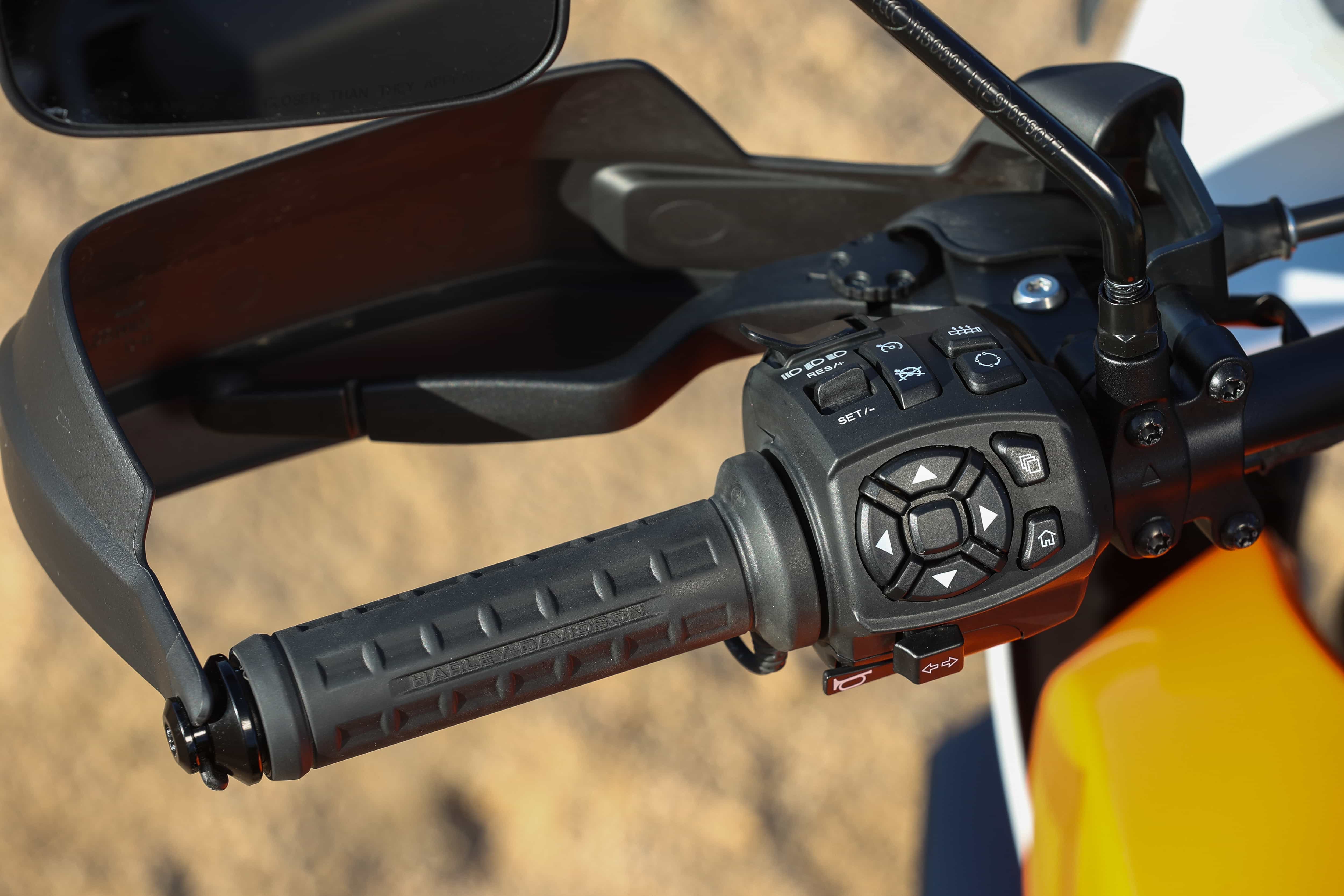
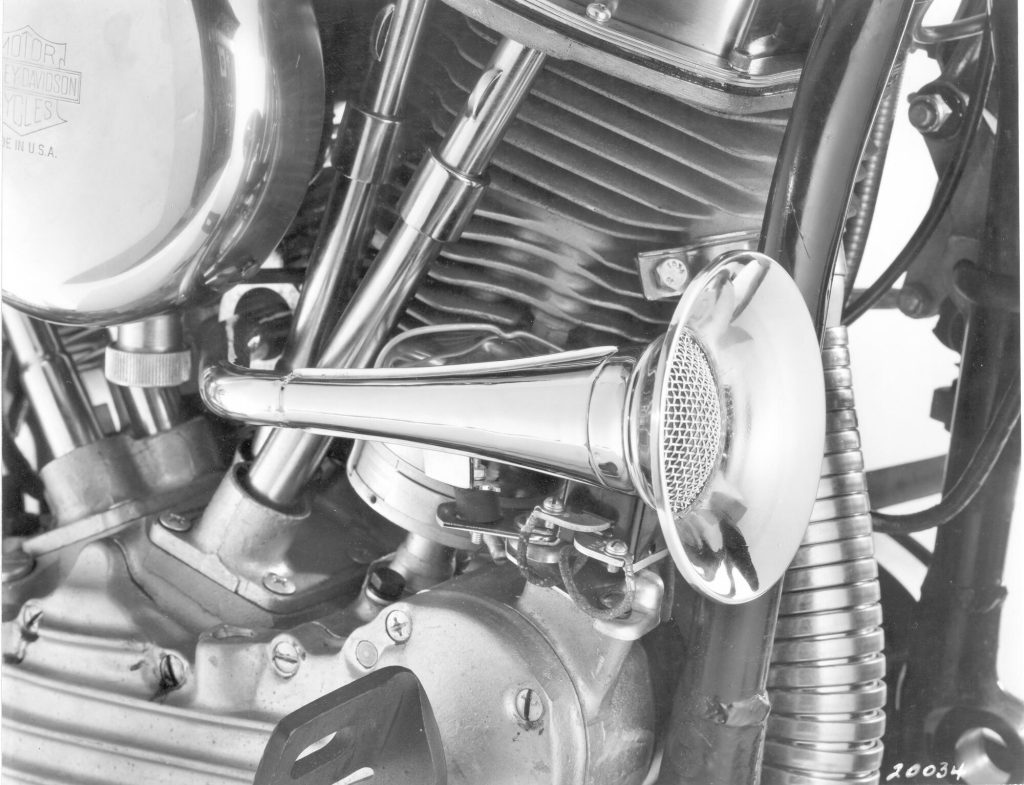
Many modern Harley-Davidson® horns appear as nothing more than a small black disc, tucked up near the neck of the bike; rarely to be seen, but sometimes heard. Some of the more traditional models still wear a decorative horn cover between the cylinders on the jiffy stand side of the bike. This is an homage to the earlier downward-pointing cover that debuted in the ’60s and didn’t change very much even into the next century. You can find these in situ on motorcycles or removed and faithfully used as an ashtray in many motorcycle shops.
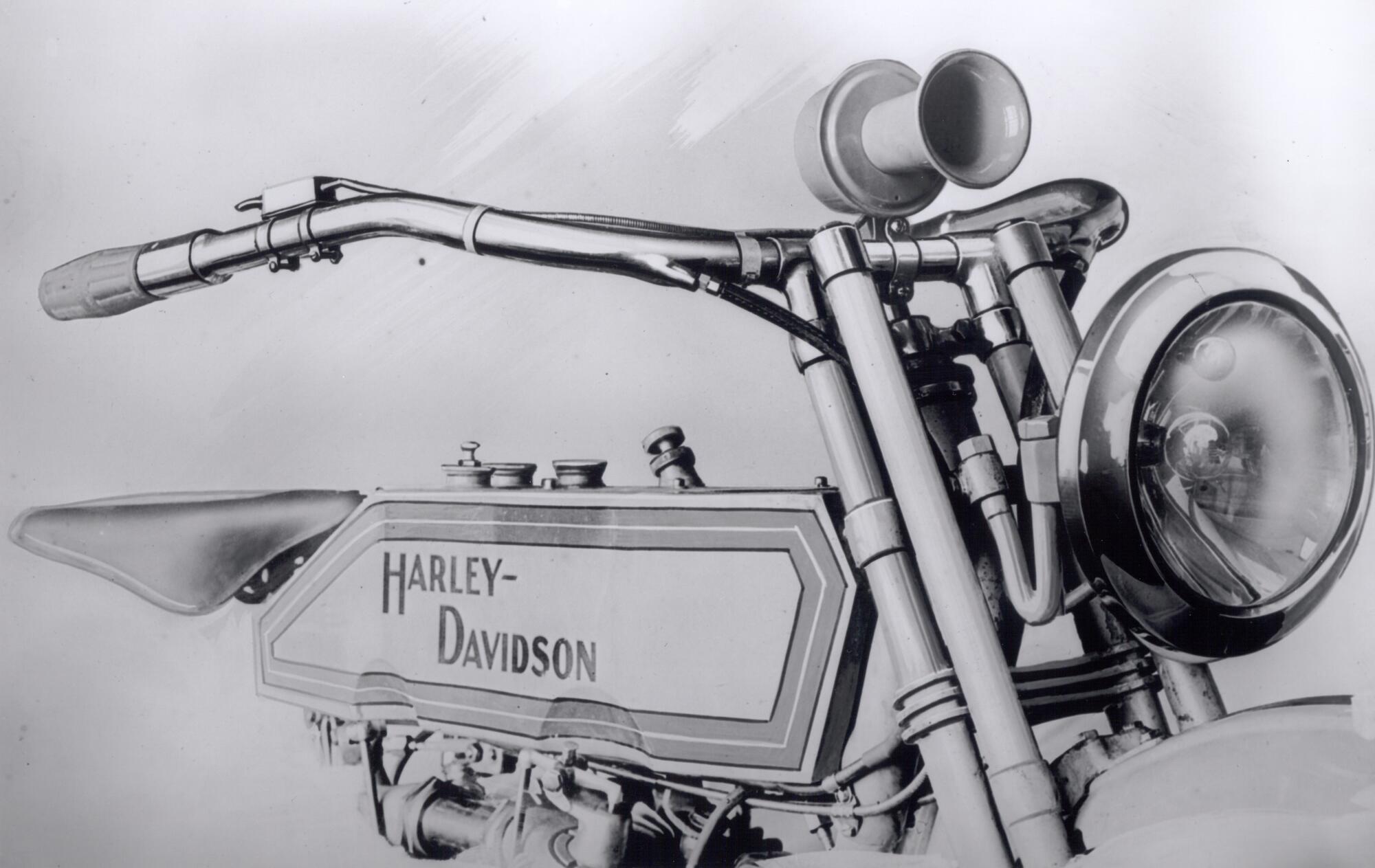
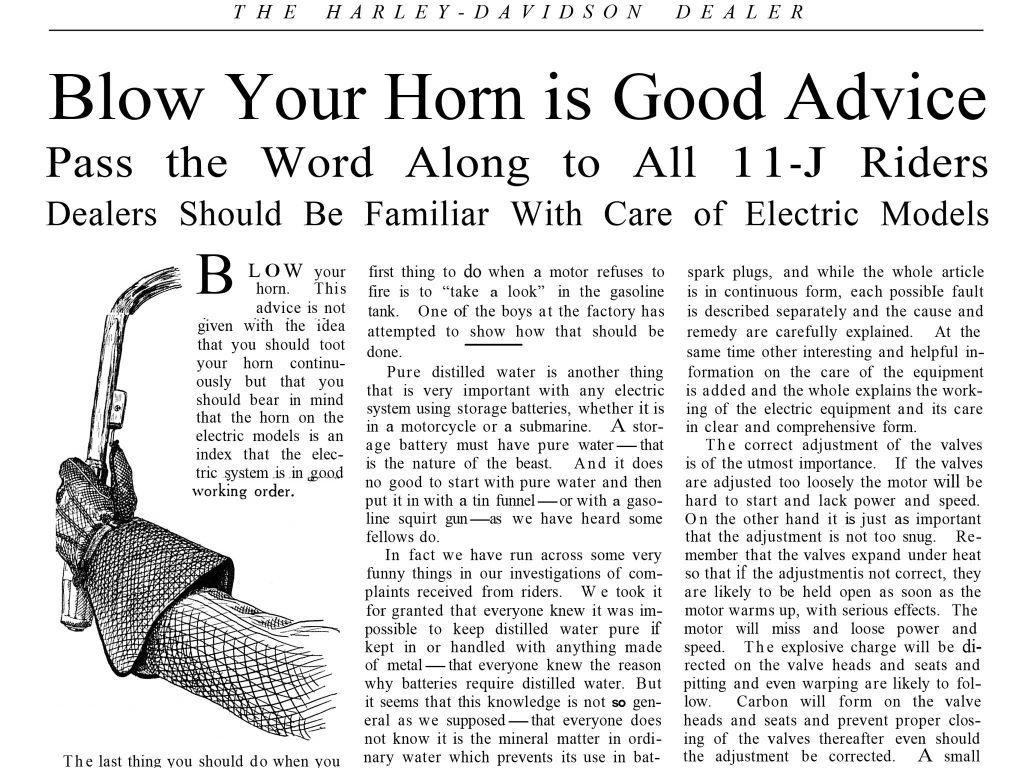
In the early days of motorised travel, drivers used horns to notify pedestrians, horses and other drivers of their presence. Horn use was considered a courtesy, and as such, the horn was a very early accessory – finding pictures of them in use on Harleys from the teens is common.
But what about that little button with the bugle? Like many motorcycle warning lamps and symbols, it’s something of an anachronism, but because Harley-Davidson was there at the dawn of motorcycling, it actually is a little pictorial piece of our history.
Very early horns did have a modest spout on them. Through the Knucklehead years, the horn (a shallow disc, like a larger version of a modern horn) was mounted front-and-centre up on the springer. In 1949, with the introduction of the radical Hydra-Glide front end, the horn was relocated. So important was the horn that Harley-Davidson changed the Big Twin frame a couple of times to give it a place to live.
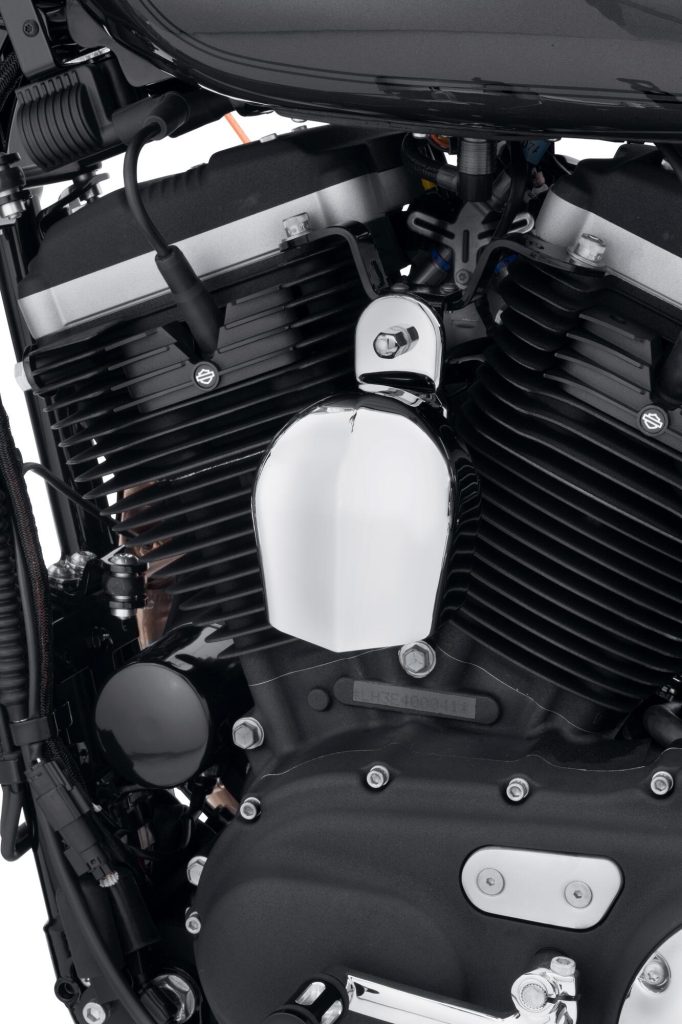
Then in 1954, just after Harley’s 50th anniversary, the horn was redesigned with its ‘power pack’ on the left side of the bike, under a decorative chrome cover. That fed a tube that snaked through the carb support, hugged the right side of the Panhead’s cylinder, made a 90° left turn and exited at the front of the bike as a delightful chrome trumpet for all the world to see. The Jubilee Horn, as Harley-Davidson referred to it, even had a little screen in it to keep out debris, large bugs and small birds. The horn truly was a horn, by golly. (For those of you on unitised bikes, you should know the trumpet-style horn was first used on K models in ’52 and then on the Sportster® in ’57 – considerably before the Big Twins.) The Jubilee was in use on the Pans until they phased out in 1965.
Even if you ride a brand-new Harley-Davidson, you will have an icon of a horn emblazoned on your button. That’s a small, but very direct link back to a much earlier time in motorcycling. Panhead or Pan America™, the Jubilee Horn lives on even today in your local showroom.
Tags:
Read more tales from the Harley Owners Group!

The underwater Harley-Davidson helping to rebuild ocean reefs
Meet the Thai H.O.G. member behind some impactful initiatives, including the submersion of a Harley-Davidson Sportster

Looking back at Asia Harley Days 2025
The roar of Harley-Davidson® engines echoed through the mountains of Khao Yai, Thailand’s famed national park region, as Asia Harley Days 2025 delivered its most spectacular edition yet.

Ladies of Harley Ride Malaysia 2025
From the bustling streets of Kuala Lumpur to the cool curves of Cameron Highlands, the first-ever Ladies of Harley Ride Asia turned Malaysia into a playground for freedom and friendship.