
Creating great videos of your ride-outs part three: in the edit
You’ve got the footage, now it’s time to make it shine! Bring your story to life in the editing room
As told to James Gill
This is where it all comes together. You did all of the thinking ahead outlined in Part One of this series, you took to the road with your Harley to capture some action, discussed in Part Two. Now, it’s time for those clips to meet and harmonise into something so engaging that viewers can feel the breeze in their hair, share the thrill of the curves in the road and taste the adventure. Start by identifying the emotion core of your video – this will guide you in your editing choices.
Letting the story breathe
First, a word of warning: don’t obsess over transitions and special effects. Filling the timeline with wipes, whips, zooms and flashy overlays can be distracting instead of supporting the story. Keep your transitions simple, let some shots linger a little and give moments room to breathe so that the viewer can soak up the sound, movement and scenery. Less can genuinely be more; a well-chosen cut between a few strong angles will feel more cinematic than constant rapid-fire tricks.
Keeping the viewers watching
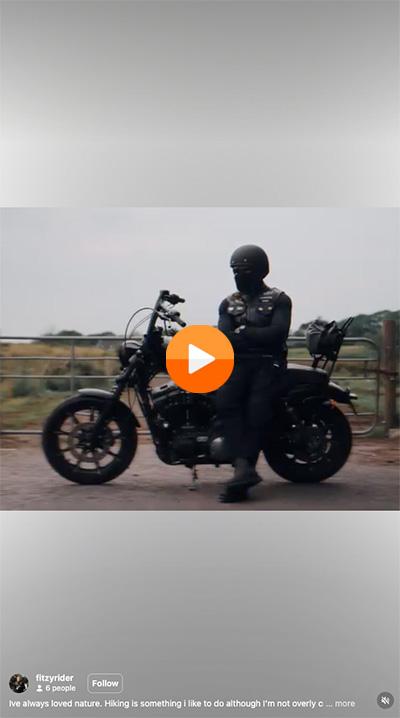
If you’re planning to share your video on social media, you’ll be fighting against the easiest action in the world: a swipe. “Viewers typically drop off in chunks about every 30 seconds,” Fitzy observes. “Long, unbroken clips of a single angle almost guarantee people will leave.”
To not fall foul of this, you need to make sure you cut between wide, mid and close-up shots and change angles regularly, giving viewers variety to keep them engaged. For example:
- A close-up of the front wheel spinning.
- Cut to a mid shot of you on the motorcycle.
- Then to a wide drone shot of the road and landscape.
- Then maybe a tight shot of your hand on the throttle or your book shifting gear.
Even if nothing dramatic is happening, the changing perspective keeps the viewing experience interesting.
Half the film lives in your ears
Sound is just as important as the images, says Fitzy. “Many riders think mainly about cameras and barely think about audio at all, which is a big missed opportunity.”
Sound does two jobs…
- Music sets the emotional tone. Was your ride peaceful and meditative? Did it feel raw, loud and wild? Slow cuts with calm, atmospheric music give a Zen feel to a coastal cruise; faster, more aggressive tracks and quicker edits can make the road feel like an intense blast.
- Real-world audio puts the viewer on the Harley®. Think about the rumble of the exhaust, the wind noise and subtle road sounds, the gear changes and engine note rising and falling. These sounds are what your body remembers from a ride. If you carry those into the video, it becomes much easier for someone to feel like they’re there with you, rather than simply observing from the outside.
Common mistakes
Fitzy has seen a lot of rider-made videos and a few issues come up again and again. However, with a little awareness in the editing room, they can easily be avoided. Here’s what Fitzy has observed:
- Videos are too long. Now that platforms accommodate longer footage, many people post several minutes of straight riding, often from one fixed angle, sometimes with nothing but music over the top. Most viewers will not watch all the way through something like this – unless it contains a dramatic or surprising moment. “Long videos are fine as a personal diary,” he recommends. “But for an audience, especially on social media, shorter and tighter usually works better.”
- No shot variation. Many people stick to a single helmet POV or 360 angle that never changes. Even if the scenery is beautiful, it quickly becomes monotonous. Cutting between angles is not just an artistic choice, it’s a courtesy to the the viewer.
- No thought for the viewer experience. A lot of riders frame videos around what they personally want to remember, rather than what a stranger would enjoy watching. Think to yourself: why would someone who doesn’t know me want to keep watching? Am I giving them a feeling or a perspective they could not otherwise get? That mindset shift alone will improve your videos.
Developing your visual style
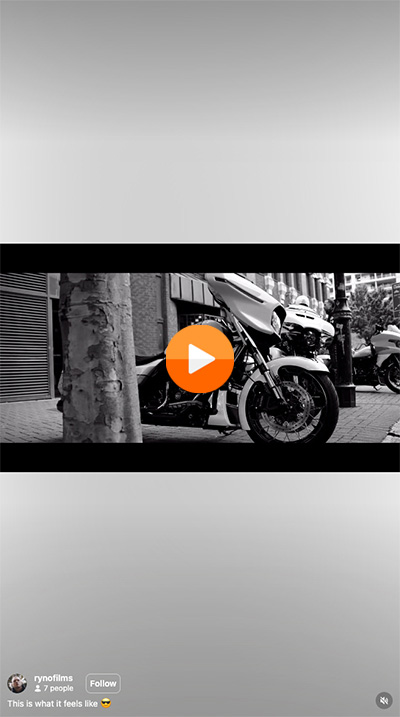
Colour grading is where your footage is a great way to put a personal stamp on a video and develop your visual style. Adding a distinctive grade can help people recognise your work, even in a quick scroll – some filmmakers are known for their colour and contrast choices. Its influence is so strong that it can even change the story, without altering a single cut.
There are a few points to consider at this stage of the edit. Most obviously, perhaps, is the colour effect you go for. Warm, golden grades can add a touch of dreaminess or nostalgia. Cooler, desaturated tones make scenes feel gritty or moody. Whereas high-contrast black and white creates a timeless look and sense of noir. Fitzy has been experimenting with this last option himself of late, enjoying how it strips away distractions and emphasises shapes, textures and light.
With these final touches, you’ve brought it all together!
Tags:
Leia mais histórias do Harley Owners Group!

Planejamento dos chapters – NHR 2026
Da travessia amazônica às grandes rodadas do sul, os chapters já traçam sua rota rumo a Foz do Iguaçu para o National H.O.G. Rally 2026. Conheça os detalhes dessa incrível logística na nossa matéria completa. A estrada nos espera!


Harley-Davidson’s racing history: Part two
In this second round-up of highlights from the Motor Company’s racing history, we meet some new rising stars who carry the brand’s success into the 21st century.