
H.O.G. Memories: Get Your Kicks on Route 66
In the second part of our new series, Bob Lowery, who served as the Director of Long Island H.O.G. Chapter in the early 1980s, shares the story of the “Mother Road.”
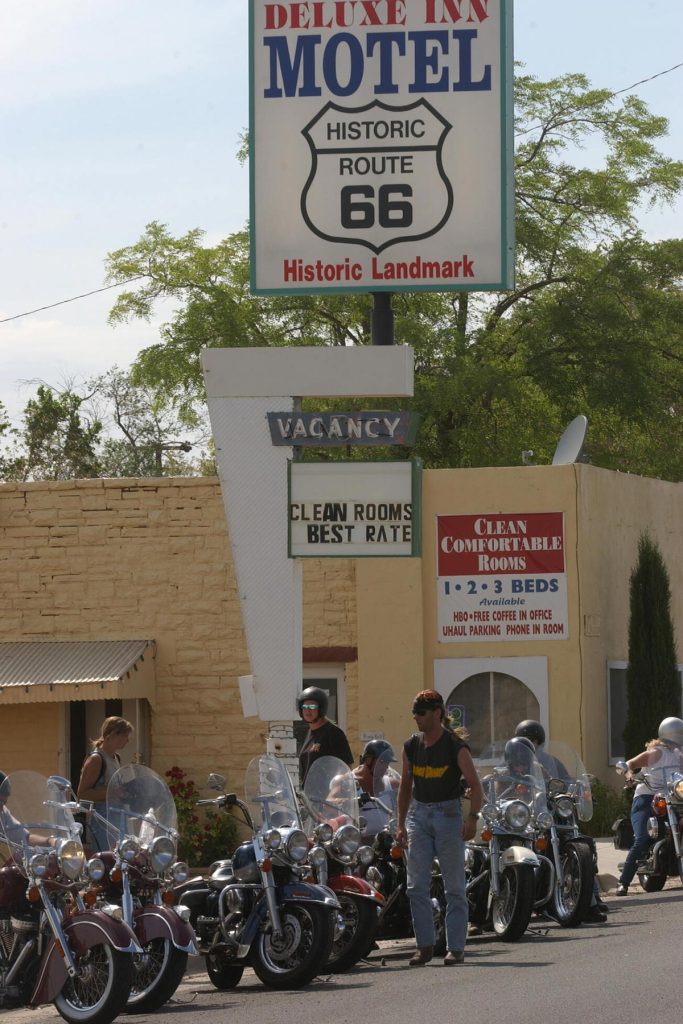
If there’s a national highway in the United States, it’s Route 66, and there’s no more special occasion than the 100th anniversary. Next year is the centennial of the Mother Road, and the hundred or so towns that dot these 2,400 miles of Portland cement will be filled with festivities and special events. They are laying out the welcome mat.
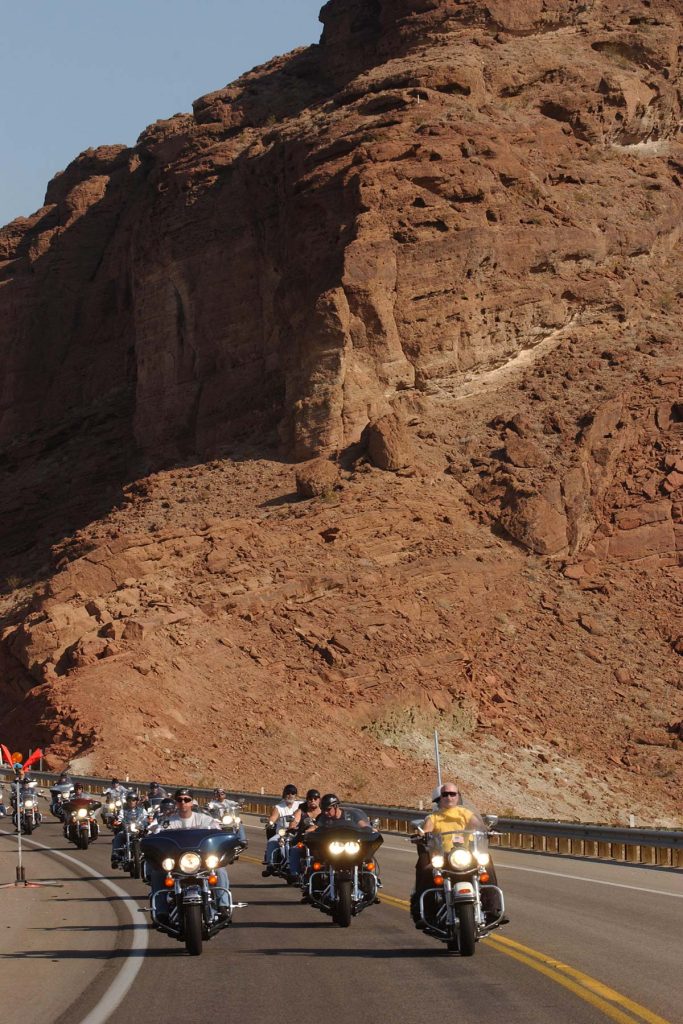
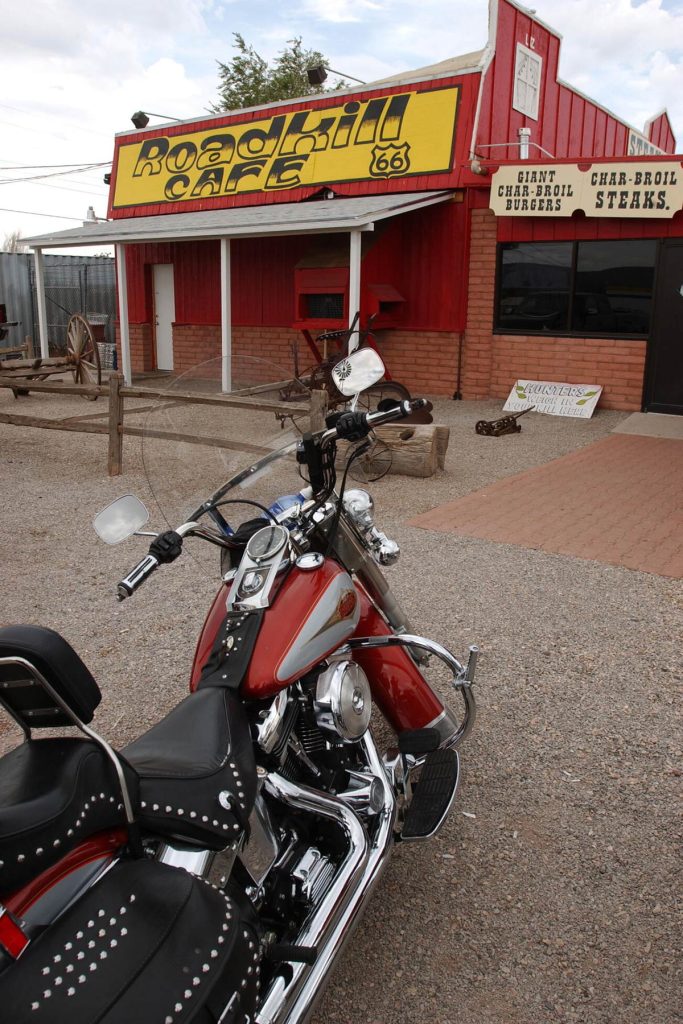
Harley Owners Group® has recognized the importance of Route 66 in the U.S. consciousness, sponsoring week-long rides from end to end, led by historians who’ve spent their entire lives living along the route.
How did Route 66 come to be? In 1926, the U.S. government took note of the growing rumble of highway traffic. Citizens were leaving their hometowns and venturing out into the country by automobile. The accessibility of cars provided social mobility to a population that was still essentially rural. People were confined to the farms where they were born and where most would die. Apart from the big cities, roads weren’t maintained, and there were few services for broken-down vehicles, so people rarely hazarded trips farther than they could return in a day. The newly established U.S. Numbered Highway System allowed the federal government to share responsibility with the states and to provide a uniform system of identification, bringing order to the mounting chaos on the roads.
There’s a long and convoluted history of how Route 66 ended up with its number, and it’s worth reading about, but more importantly, it was the first all-weather highway to the West Coast, covering approximately two-thirds of the country. Many coast-to-coast highways were northern routes, and the deep and unpredictable snow storms in the Rocky Mountains closed the roads for weeks at a time. Route 66 started in Chicago and meandered south through Missouri, Oklahoma, Texas, New Mexico, and Arizona, before ending in Santa Monica, California. It became a crucial shipping road for the trucking industry.
When the stock market crashed in 1929, the Depression hit every sector of American life. And farmers in the Midwest were hit with a double whammy: the Depression and the Dust Bowl era, so-called because of the strong hurricane-force winds that wreaked havoc on America’s farmland. Crops withered on the vine, and cattle, horses, children, babies, and the elderly died due to dust inhalation and associated diseases. Few had money to weather the catastrophic damage to their livelihood, and the sunny climes of California, where the work was, beckoned.
Oranges, almonds, grapes, tomatoes, lettuce, potatoes—food as far as the eye could see—needed harvesting, and crop-pickers could make a decent living. The Midwest might have been the nation’s breadbasket, but California was the agricultural center of the country. Workers left the wrecked farms in Oklahoma, Texas, and Arkansas, and headed west on Route 66.
It was novelist John Steinbeck who gave Route 66 its eternal fame with the label “The Mother Road.” In his 1939 novel The Grapes of Wrath, he tells the story of the Joad family, who left their native Oklahoma and traveled to a better life in California.
By the mid-1930s, Route 66 was already being called America’s Main Street and lived up to its name a few years later when the composer Bobby Troup immortalized the road with his song “(Get Your Kicks on) Route 66”. Nat King Cole was the first to record it with the King Cole Trio in 1946, and it’s estimated that there have been more than 150 covers of the song.
Route 66 was gradually replaced by superhighways and was formally decommissioned in June 1985 when the last segment of the road was bypassed by the Interstate Highway System. However, many people recognized its historical and cultural significance, and large portions of the original route have been preserved and are still accessible today as Historic Route 66, attracting millions of visitors each year.
IF YOU GO
- You’ll find the start of Historic Route 66 easily enough at the corner of East Adams Street and South Michigan Avenue in downtown Chicago. You’ll see a “Historic Route 66 BEGIN” sign. Take some pictures and head south.
- About 80 percent of the original route is rideable today. It parallels interstate highways I-55 and I-40 for most of the way. In some places, Route 66 is the service road to the interstates, so you can hop on and off at your convenience.
- Do your homework before you go. Dozens of locations are celebrating the centenary with street parties, festivals, car shows, and county fairs. Facebook has several Route 66 sites, but state information websites also provide information. Additionally, there are books and information pamphlets in the state hospitality sites on the highways. Grab them and read them.
Tags:
Read more tales from the Harley Owners Group!
Realising the dream of visiting the Harley-Davidson Museum in Milwaukee
A couple from Burgos achieved a lifelong dream by making the pilgrimage to the Harley-Davidson Museum in Milwaukee.
Taking the long way around…
A trip to see old friends turned into an epic trip across the country for Harley Owners Group member Arnold Evanson.
Harley-Davidson’s racing history: Part two
In this second round-up of highlights from the Motor Company’s racing history, we meet some new rising stars who carry the brand’s success into the 21st century.